Wednesday, June 22

Reflexions on Video #2

So a little time has passed since my You-Tube of O Souverain and the following reflections should be made:

  1. My fingers move with much more fluidity and even rhythm than ever before, even in the best of my days and even though my physical condition is much worse than back then: thank IMS for that! I still have to regain speed and re-learn all scales, but I'm struggling much less than I ever used to.
  2. 30 minutes a day is not enough to build real endurance.... or if it is, it'll take more than the one year I spent on it.
  3. Strangely, I can practice for hours, but this relatively easy piece tired my lips enough to sag notes at the end of crescendi: baroque repertoire (especially the technical runs) seems easier.

During the winter, I had challenged myself to do one (small) recording per week, just to motivate myself to practice more and push to better quality of playing…. well….. that didn’t work out! No matter what, as soon as I hear the recordings, I notice “small things” that can be fixed with just one more take, then just another knife stroke on the reed, then another take!
Conclusion: recordings take time away from practicing and making reeds!

Video Production:

Making a good looking video is hard! Lighting is a huge deal and... well... let's just say I won't argue with my wife anymore when she tells me to use wrinkle cream under my eyes!

I bought an expensive web-cam because I thought it best to stream directly into the computer (not possible with affordable handi-cams)... I was wrong. I don't know if I need more RAM or if high-definition is just too much for Windows 7 (I must try Linux now). The choppiness in the video would have not happened with a handi-cam and I could still mix the audio track and synchronize easily enough with Windows Live Movie Maker (Macintosh has the equivalent and Linux is supposed to also): this would allow me to continue to do multi-track recording and use my special recording device.

What has improved:

  1. My sound quality (tone colour) is much deeper and more open, generally better than it has ever been, even in the best of my days. Is this due to better reed making and materials (staples, shaper, scrape technique) or is it due to my oboe being revoiced? This is difficult to say as it could also be due to better attention to what I hear and how I practice.
  2. My general sense of phrasing: articulation and dynamics were probably better years ago, but they have definitely improved since my 1st recording in February and I have definitely refined my sense of short and long term direction for the melody compared to 15 years ago.

What remains to work on:

  1. General sound control and finger technique. My rhythm is more even, but I still tend to anticipate the beat a lot, especially when doing a crescendo or running short on breath.
  2. Better breathing-in: the exhaling is fine, but my abdomen seems tight and I think this contributes to the fatigue.
  3. Learn to fully relax lips in just a few beats of rest.
  4. Acoustics: recording in a room with more reverberation!
    This could mean moving my desktop computer to my dining room… need to try!

Thursday, June 16

video #2, recording #4 - MIDI Accompaniment and Faith in Music

Well over 8000 visitors: BRAVISSIMO! 65 countries: AUSGESEICHNET! To honour all you visitors, I will keep the list of countries in another tab. Eventually, I will put your flags next to your country’s name.

Blog: over 6 months

I started this blog for 2 reasons:

  1. to track my progress as I attempt to regain my former skills on the oboe, now that I am a software engineer living with chronic pain;
  2. to communicate with people of all descriptions and, hopefully, encourage others in similar situations to mine.
Interestingly, Blogger Statistics shows me that people actually get here by Google Searching topics which include:
  1. oboe reed cases (the single most popular post by far),
  2. MIDI accompaniment and sound recording techniques,
  3. general oboe playing topics,
  4. IMS and physiotherapy concerns,
  5. playing with an extracted tooth!

I wish to express my gratitude to all of you for taking the time and making the effort to visit here. I really enjoy when people leave comments or send e-mails. All contact with people from several continents and from home is a real treat and I hope the favour is returned!

2nd video:

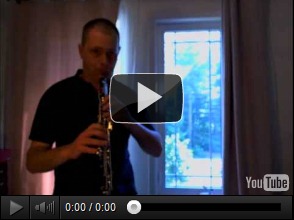
O Souverain: oboe & MIDI orchestra

Apart from a few sagging notes, undecided phrasing here and there and a bit of hasty rhythm (all predicted in this previous post), pretty good improvement in 4 months, if I may say so myself! If this trend continues, in a year, I should be a decent player again. My apologies for the bad picture quality: I have a lot to learn about lighting… nah, I’d rather spend my time practicing oboe! On the other hand, I really should have spent more time on the MIDI accompaniment…

A cute thing about making recordings at home is that I have to contend with my dogs not understanding that silence is more important than the cat running on the other side of the street! 5294752263_83eb41f392But, how can I get angry at such a cute little thing? (Dog face Dogs are great! I truly love them! Dog face) I could have just cut-out my interjection “Popcorn Down!”, but you see my mouth moving in the video….. and because the opening recitativo is never played at the same speed, it’s really hard to use the video from one take with the sound-track of another!

One thing that really amazes me is how much the choice of speakers and/or head-phones (ear-buds) change the quality of my oboe sound. On my real sound system, it sounds like I hear it when playing, also true on my desktop computer and an old head-set that came with a waterproof Sony Walkman tape-cassette player! But the high-quality new Sony ear-buds I just got or my lap-top speakers…. much brighter and a little buzzier.

MIDI accompaniment AND multi-tracking.

This is not the first time I use MIDI as accompaniment for a recording, but I’m glad to have found a file ready-made with dynamic expression already included. I’ll add links to MIDI sources and free sheet music to my page on great places as I come across them. I did use software to add some orchestration a little bit, but thankfully, most of the work was already done for me (thank you Aria-Database!). For this recording, I had to “clean up” the MIDI file before it could play well with instrumentation other than the piano. The only dynamics are done by adding or removing instruments and there is no rubato apart from the opening recitativo. I found it curious that playing the file without rubato or dynamics at all still conveyed an inspiring quality. I guess this is the evidence of an extraordinary composition.

Music is faith… in my point of view!

Ô Souverain, sung by Ben Heppner.

I must have already mentioned that I consider music to be more than an art form, more than a mathematical equation; in fact, I consider it a full-fledged expression of the living soul. I consider music to be the closest direct language of Divinity that humans are capable of understanding. Some songs, a small handful, seem to speak to my soul very directly and stir something that I cannot describe in terms of emotion or psychology. In fact, I don’t even understand what effect they produce, only that I can’t sing them because my throat gets a lump! “Ô Souverain” is one of these.

Music, greater than song!

I believe that songs are music with a handicap; that is, because words convey a clear meaning, they severely limit the potential panorama that we can experience from a melody is restricted to the meaning of the words. Some melodies, however, seem taylor-made for the words. These songs usually loose much when they are translated. In the case of O Souverain, the link between French words and the melody is so strong that I would play it with one pattern of dynamic phrasing and articulation, but would be disappointed when playing back the recording. When putting the words back on the notes, it became clear why my phrasing was wrong.

I’m really not a fan of opera, but I have to admit, Jules Massenet wrote an powerful song as part of his opera Le Cid. It might be an overstatement, but Radio hosts have said that the Metropolitan Opera would not have been able, at the time, to perform Wagner without Ben Heppner. So it is a privilege for me to include a You-Tube of this amazing Canadian Tenor. The performance I give does not follow his style. Apart from the fact that I play the oboe in my study rather than singing at the Met, one of the the miracles of music is that it speaks differently to everyone with a Cartesian product of different messages from each performer and at each performance.

I usually consider lyrics to severely restrict the meaning of music. But some melodies seem custom tailored around words that are especially meaningful on their own right:this song is one of them. Translation is a very difficult thing because a language is much more than a vocabulary and grammar, it is a whole mind-frame  and worldview; it reflects the deepest characteristics of the culture that uses it in the unique way it uses it. So here is the original French and my best attempt to translate it.

Ah! tout est bien fini. Mon beau rêve de gloire, mes rêves de bonheur s'envolent à jamais! Tu m'as pris mon amour, tu me prends la victoire, Seigneur, je me soumets! Ah! It's all over now. My wondrous plans of glory, my beautiful dreams of happiness are all now dust in the wind! You have taken my love, You now take my victory, O Lord, I do submit.
Ô souverain, ô juge, ô père, toujours voilé, présent toujours, je t'adorais au temps prospère, et te bénis aux sombres jours. Je vais où ta loi me réclame, libre de tous regrets humains. O Sovereign, O Judge, O Father always veiled, always present, I adored you in prosperous times and bless you still in troubled days. I go where your law commands, free from all human regrets.
Ô souverain, ô juge, ô père, ta seule image est dans mon âme que je remets entre tes mains. O Sovereign, O Judge O Father, Your image alone fills my soul which I commend into your hands.
Ô firmament azur, lumière, esprits d'en haut, penchés sur moi, c'est le soldat que désespère, mais le chrétien garde sa foi. Tu peux venir, tu peux paraître, aurore du jour éternel. O Firmament, azure blue light, Spirits on High leaning over me, it is the soldier that despairs but the Christian keeps his faith. You can come, you can appear dawn of the eternal day.
Ô souverain, ô juge, ô père! Le serviteur d'un juste maître répond sans crainte à ton appel, ô souverain, ô juge, ô père! O Sovereign, O Judge, O Father! The servant of a just Master answers your call without fear. O Sovereign, O Judge, O Father!

Wednesday, June 8

IDRS 2011 and strange instruments.

This year, the convention of the International Double-Reed Society (IDRS) has generated much more discussion than last year. I did not go this year because the prospect happened much too quickly. But I’m hoping to go next year.

Attendees mentioned:

  • concerts and recitals: being able to talk with (some have even tried the reeds of) the performers
  • master classes and workshops
  • instrument museum and exhibits by almost every oboe/bassoon maker on the planet – where you can try and compare the brands
  • meeting fellow oboists from around the world and doing things together

Here are links to a discussion on the BBoard (here) and an excellent blog review (here). People who went were generally really happy about it.

258332_202955063081598_100001013189024_530146_1447247_oConclusion: I’m definitely getting membership during the year and hope to go next year. In 2012, it will be in Ohio and 2013 will be in California.

A picture that was taken there is rather curious: the Lupophone made by Guntram Wolf. The oboe, oboe d’amore and english horn are rather standard, but the barytone (bass) oboe is not. A few big-names make barytone oboe, but there is also the Heckelphone and the Lupophone which fulfil the exact same role in the orchestra, except they look completely different. I’m really happy that sound (not appearance) is deciding how the instruments are built.

Tuesday, May 31

Piano with computer AT LAST! … and melting reeds!

I finally got my laptop to communicate with my Yamaha Clavinova (CLP-150) NoteParty smile. I did so by installing a 2nd operating system on my computer (Ubuntu Studio) Hot smile. For those who don’t know about dual-booting: I can use either Windows 7 or Linux (Ubuntu) on the same machine Computer. studio_setupWith a powerful computer, you can even use both operating systems at the same time (I do that at work)…

The great advantage of Ubuntu Studio over other Linux distributions is that the most important “behind the curtains” packages are already included. For instance, because MIDI is an international standard (decades old), it has a module that detects MIDI connections and allows you to connect them to your performance/recording/printing software. mscoreThis is how I only needed to plug-in my Piano and “ta-da!it works: no drivers no nothing! If you have ever tried to install hardware drivers on Windows, you’ll appreciate the value of this. But more still (for frustrated Windows users), booting up and shutting down are lightning fast and the updates hardly ever require restarting the computer…. they certainly don’t shut down the computer when you’re turning it on for a presentation! Smile with tongue out And for those who really know how to use the operating system, program crashes don’t break anything else!… really not as easy on Windows.Linux is what I use at my job: it’s built solid, dependable and fast. Any task (any at all) you do on Windows or on a Mac can be done on Linux.

Unfortunately, the really powerful (and expensive) software is for Mac or Windows. Ubuntu studio comes with a selection of programs for recording, composing and so on and you can easily get some much better ones (all for free – legally! Open-mouthed smile). However, almost all programs can export/import in MIDI format, which means the heavy work can be done on the big programs in Windows and the performance and recording work can be done in Linux using the same files!
I still have a bit of trouble getting these files to make the piano play and record what I play on the piano directly to a musical score writer. But that should not be too hard to figure out: the really aggravating part is getting the computer and the piano to communicate: blueReed_meltedas I said, completely automatic in Ubuntu Studio.

Dog days for oboe reeds…. a bit early this year.

In an earlier post, I mentioned how cool dry weather can ruin reeds. Well, hot muggy weather is not any better! Reeds that were playing well enough have now “melted”: they don’t respond until I blow hard, but if I blow harder, they also want to stop playing!

Some reeds do play well, those that were made with hard cane. They are hard to play, but they are responsive and they do allow for a good dynamic range… they are just murder on endurance. The fantastic reeds from a few weeks ago are still playing very well… but you know what? I think I’ll save those and protect them from potential aggravation!

Tuesday, May 24

Binding Reeds and Blade Offset

Results from tying reeds.

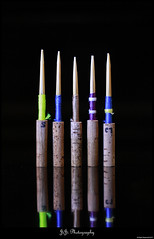
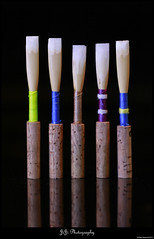
A few weeks ago, someone at the BBoard had asked me to show high-definition pictures of my reeds tied using the Cane Guide (le Guide Roseau) and pre-binding. Look at the very large size of the picture by clicking on them: this will bring you to my wife’s photo stream where you can choose “original size”.  The binding colors are reeds with the following characteristics (from left to right):

  1. IMG_0795Yellow (neon green): Shaped with a Weber Wide (0.60mm gouge) and tied using the Cane Guide on a Stevens #3 thin wall staple. This reed has not yet been chopped (only scraped for blank storage).
  2. Blue: Kunibert Michel 7.25 shaper with my own 0.57mm gouge tied on a Chiarugi #3 staple using the Guide Roseau. This reed has been scraped a 1st time and is playing remarkably well. A very slight slipping can be noticed. Evidently, it is not slipped at all near the thread and the blades are rather loose. I probably tied it too long and not tightly enough. At 73.5mm total length, it plays at A=440 to A=442 without any problem.
  3. Gold: Kunibert Michel 7.25 shaper with my own 0.59mm gouge tied on a Chiarugi #3 staple without any binding aid. This reed was finish scraped several months ago. There is a good sized offset on this one (it often slips even more while playing) that flares from binding to end. IMG_0790This means I did not hold the blades well aligned when binding. The reed still plays very freely, though the dynamic range is limited. I think the limited range is due to the offset, but the free playing is from a good selection of nicely flat cane.
  4. Purple with 2 white bands: RDG –2 shaper (0.61mm gouge) tied on a Chiarugi #3 staple without any pre-binding aid. There is a moderate offset on this one which inhibits both free playing and dynamic range, otherwise, the reed is stable and responsive. The binding looks higher on this one than the others: most of my reeds finish the winding 1-2 winds before the end of the staple, so this one might be tied all the way to the end. It could also have half or one wind past the end, which would explain the inhibition. But usually, reeds that wind past the staple  behave much worse.
  5. Blue with 1 yellow band: Kunibert Michel 7.50 shaper with my own 0.58mm gouge on a Chiarugi #7 staple. Not yet chopped (only  scraped for blank storage).

Making good reeds is easy!

Testing the blue reed.
I have irked many people by saying this before, but I stick to that statement! It’s all about selecting the proper cane and shaper and binding properly. Here are some sound clips of the blue and gold reeds for a sound comparison. Note the blue one took my less than 5 minutes to scrape to get to this point! Also note that I am not making huge efforts for dynamic expression: I just wanted to get an idea of how they sound. Be careful: the 1st time a reed is scraped, it often plays very well quickly. Do not try to get it perfect on the 1st “sitting”: reeds tend to harden-up after a day and its best to do a 2nd scraping the next day and a 3rd scraping a week later.
Testing the gold reed.
On the 2nd and 3rd scraping, the reed should become as good as it gets, tough some adjustments can be made after that still.

Most important, never try to make a decent reed “perfect” when you’re tired and/or frustrated: you will ruin it irreparably!

Theory of Reed Slipping (offset in the binding)

The following  is explained at length in Jay Light’s book and the question has been asked on the BBoard. Many prolific oboists of the American reed technique do on purpose to offset the blades of their reeds while binding. I don’t like this mis-alignment, but it works for a whole lot of people and I did get a few really good reeds that way.

The question asked if it is OK for the cane to slip such that both sides of one blade are inside the other blade. Well, if a cane is correctly shaped and folded, this is impossible! For good slipping, when tying a good piece of cane, the symmetry will make one edge of each blade overlap the other. In other words, if only one side of the reed is slipped, something is wrong; if one blade is fully “inside” the other, it was not folded in the middle of the shape! So in other words, my preference is for the last diagram in this slide-show; the 2 middle diagrams are OK by American standards and the 1st is just plain wrong.

One thing I should note is that many people believe it is necessary to offset the blades to prevent air leaks: this is completely false as most of my reeds that leak also have offsets whereas those that are tied in perfect alignment never do.

Saturday, May 14

Overdoing it & Recording Practice Sessions

Stuff going on this weekend, so pictures of the sides of my reeds comparing “manual” alignment with the Cane Guide will have to wait ‘till next week.

It’s been about a year now since I started lunch-time practicing with my fixed-up (almost) 1921 Pan-American beginner model and sent my Lorée to get revoiced in NY. I suppose my next You-Tube video should commemorate that milestone. I got the Lorée back at the end of June or beginning of July, so I still have time to get in better shape.

Update on physical progress.

No treatment this week. The weather was pretty sunny all last week, this week is turning to rain again. When the weather gets sunny, I get sore, when it gets cloudy/rainy, I get tired. But I’m doing much better than expected: yesterday the software development team spent the afternoon merging source-code all gathered around someone else’s computer. The twists and contortions I had to do to read his very small fonts should have given me a monster headache, but no, I’m doing fine! In fact, not even any Saturday morning headache. So the IMS treatments are evidently working.

(Not) Waving for the Camera

Musical, not physical expression.
In a previous post, I discussed how swinging the body while playing might help or hinder the expressive qualities of playing. My conclusion was that too much is distracting and completely stiff is boring. I also opened the question that perhaps body motion aids in phrasing.

Well, consider this video, one of my favourite pop songs of all time. I have never seen a band with fewer stage stunts … but close your eyes and just listen: there’s no denying the power and depth of their musical presence!

Can “expressiveness” be overdone?

I consider two kinds of dynamic expression: short expressions and long phrasing. The long phrasing is what we spend most of our years perfecting, the short expressions are anywhere from one to maybe 6 notes long, but describe our personal style and our understanding of how the particular style (baroque, classical, tango etc.) speaks.

Swelling notes, but not too much.

I’ve been recording my practice sessions lately, and I wonder if I’m not going to far in my dynamics. The long phrasing is fine, but the short expressions will go from a true pp to a true ff in a matter of one beat. When I just write/say that, it might sound like a dream come true for the oboe, but when I record myself and play it back, I’m not so sure anymore. Then again, I need to play with the microphone and computer “gain” (sensitivity) settings and their positioning: this changes the way the recording ends-up sounding quite a lot!

When I listen to my hero Albrecht Mayer playing what could go berzerk with dynamics, I find his playing much more tame than I would expect, but full of energy and vigour nonetheless!

Computer Aided Practice Recording.

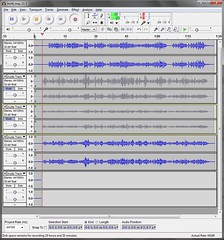
More and more, I’ve been using the computer to record my practice sessions. I’m finding it downright revealing!  Using the free and powerful software Audacity, I recorded the piano accompaniment on one track. Every time I press the record button, a new track is added while playing all the tracks already there so I can hear the piano while recording. Previous tracks of my own performances can be muted one at a time or all together. This way I can compare the different performances and verify the progress.

One REAL test for tuning is to play along with one of my previous tracks or have 2 of my tracks play together… OUCH! When playing this way, I am forced to adjust to the “other oboe”: nothing says that the “other oboe” is in tune Smile with tongue out, but there is an old saying in musical performance: “If the other guy is out of tune, it’s my fault!” [for not compensating]. This is much more difficult than playing with other instruments.

Getting the piano part is not too difficult, it requires a CD or any kind of computer file where the piano was recorded. A CD can be “ripped” with free programs such as WinLame and each tune or movement becomes a separate MP3 file. In all formats of recorded performance (actual sound file), just drag-and-drop the file onto Audacity and a new track is made for it. If you have a MIDI file, it can be converted into an actual sound file with other free software such as SUPER.

Sunday, May 8

Tying Reeds & Significant IMS Results

I’m now getting IMS every 2 weeks instead of weekly. I can’t tell if IMS is supposed to treat/heal fibromyalgia directly, but it does work on big pains that probably contribute to the condition of fibromyalgia syndrome (FMS). For example, “Saturday Headaches” are virtually gone and I can walk without knee braces much more than in the past few years. I can play oboe until my mouth stops without excess pain in the arms. I haven’t systematically verified if regularity of notes has improved or not, but not having noticed any problems is a good sign.

Stretching still seems best for the general FMS conditions of constant tension (especially in the legs) causing fatigue. My sleep really improves when I stretch at night. I still get headaches, but it seems due to the season (tree pollen) and bad habits at the computer workstation. Slouching forward and back is really hard to quit.

My therapist started working on slender muscles that cause the worst pains when practicing or working around the house. These are long slender muscles in the forearm and shoulder, apparently under other muscles. The first treatment on these muscles caused a huge grasping reaction: the needle was therefore considerably painful. The reaction (including hot and cold sweats and my whole body shaking) lasted for several minutes after the needle was removed and the soreness in the arm was so bad, I had to leave work early because I couldn't concentrate. The next day, everything was fine and those muscles were fully relaxed... that is, even more than "normal"; in other words, a very welcome relief! Over the week, the arm remained rather well. When strain returns, it returns much less than before. The second treatment on those muscles was MUCH easier: no huge reaction and only moderate soreness for the rest of the day.

Treatment on the lower back is funny: relief is felt immediately and lasts for the remainder of the day. The next day, I get twinges again, but the 2nd day after, the back is much more relaxed and remains so for about a week.

Binding (Tying) Oboe Reeds

I’ve seen clarinet and saxophone players buy not only a dozen different mouthpieces, but also a dozen different ligatures to get their reeds to play the way they like. Now consider that once you’ve tied the reed and started scraping, that’s it: no going back! I really consider the choice of shapes, staples and the binding more important than most characteristics of the cane itself.

A Google search should give you a good number of video demonstrations, textual explanation with images (click the pictures for their source), books and DVDs that are worth buying. So I will just add my observations on what is important. Tying reeds is a simple concept, but it requires a  whole lot of care and attention. The following factors must be considered:

  1. length of cane on the staple to ensure proper seal without constraining the vibration,
  2. proper alignment of the cane (with or) without sideways slippage,
  3. winding the thread so it won’t pass the end of the staple.

There are many schools of practice, most notably Philadelphia (American) scrape and various European scrapes. Number 3 is the only thing that all schools agree on (to my knowledge): the thread must stop one or two twists before the end of the staple. Winding thread must never go past the staple. To this day, I still find reeds that refuse to vibrate well have been tied 1/2 to 1 wind of thread past the end of the staple.

Concerning the length at which the reed is tied, many oboists from every school of practice tie at a specified length, regardless of the shaper and/or staple they use whereas others tie at specific lengths that vary with the choice of staple and/or shaper. My own experience considers that the important issue is where the cane closes with respect to the end of the staple. I have found that what my main teacher (Bernard Jean) taught me remains the best way to ensure free vibration of the reed for fuller dynamics and ease of responsiveness: the blades should close one or two twists of the thread before the end of the staple. Because different characteristics in the cane and variations in staple dimensions (even within the same model from the same manufacturer) means that the cane will not always close at the same length: so binding includes pushing up or pulling down the cane before finishing the thread winding.

Le Guide Roseau (Cane Guide) and Pre-Binding for proper blade alignment

For number 2, the proper alignment of cane blades, there are again disagreements. Many who follow variations on the Philadelphia scrape like to offset the overlap of the blades whereas pretty much all who use European techniques expend considerable efforts in eliminating any offset at all. My observations suggest that some offset might be good for some people who have less lung strength and I have been surprised with excellent reeds that had slippage. But in principle and for my own use, I fully agree with the European idea of perfect overlap (no offset at all). This is a very difficult thing to accomplish because the winding thread produces torque that naturally wants to twist the cane with it. Luckily, there are 2 ways to virtually ensure complete absence of offsetting.

The video above is made from still images and shows what I call pre-binding. This consists of using some delicate thread (like the cheap stuff that comes with sewing kits in corner-stores) to wrap the top part of the cane before binding. This prevents slippage due to torque during binding and holds the cane reasonably well on the staple which relieves some of the difficulty of finger-holding during the bind. Delicate thread ensures the cane does not get damaged and it is easily removed when the binding is finished.

Pre-binding is not perfect and if done improperly will allow slippage. Le Guide Roseau (the Cane Guide) is an invention by Fabrice Rousson which eliminates the failings of pre-binding. He provides his own video demonstration (French only, but visually self-explanatory) and the slide-show to the right gives the highlights. Although it might not look like much, after having tried it, it really does do wonders. I tied over a dozen reeds with it and it is superb: by far easier and more dependable than pre-binding. I will scrape some of these reeds next week (that will be the real test) but looking closely at the side of the blades near the thread is the most promising I have ever seen.

Mr. Rousson makes one for oboe and one for English Horn. The one for oboe does not fit the widest shapes so well (RDG #2, Roseau Chantant RC3, Kunibert Michel 7.5 – they tend to split), but these shapes are really for oboe d'amore anyway. For those shapes, pre-binding remains a very useful option, but for real oboe shapes (RDG -1, Kunibert Michel 7.25, Weber wide), the brass cane guide works fantastically.

You can get instructions and more pictures on tying with the Cane Guide here.

Vous pouvez obtenir des instructions avec plus d’images sur le ligatturage avec le guide roseau ici.

Saturday, April 30

Oboe Reed Shaping and Fibro-Fog

Soleil Lovely day today: sunny and warm day
=> so staying in the comfortable cool shade of the TV room! Rire

Ugly stuff first,

The past 2 months were generally rough, but this week was especially harsh on the fatigue aspect. Most (not all) sufferers of fibromyalgia also get chronic fatigue syndrome.... again named that way because the medical field can find no explanation for it: nothing physically wrong! In other words, for no reason at all, we are always tired, not sleepy, but tired as if we had been chopping firewood all day.

Fibro-fog is when just being awake is like moving through a thick fog of confusion and physical resistance. Remember the Claritin commercial of a person taking out the garbage in a deep-sea diving suit? That explains it perfectly! The simplest tasks like getting milk for the coffee becomes confusing: exhausting to open the fridge door, and then not knowing what to do next! This is very different from dementia, Alzheimer's or senility because it is completely related to the physical aspect: as soon as the muscular crisis is abated, full mental faculties return; plus we are aware and feel ridiculous about the issue. But it’s not as easy as taking pain medication to restore mental faculties, the body has ways of insisting on giving us a hard time.

Occupation Hap-Hazard

Luckily, for my employment, some activities become so mechanistic and automatic that they can be done correctly with only some slowing down of the process. Even mentally complex tasks like debugging a program can be done. But if you ask me to get up and get printed pages across the floor, I will likely get lost on the way!

So I hesitate to embark in musical performance with an ensemble: I cannot predict when this will happen. There are also evenings when I get home and even watching TV becomes exhausting. I can really thank God for my truly wonderful wife who copes with full understanding: she just plays along with it, not making any big deal - which helps me accept it quite a lot! There are forums for fibromyalgia sufferers, but the number of hours in a week is limited and I get MUCH more benefit from participating in the BBoard and the Facebook group "Oboists in the World". Feeling like a musician again is powerfully uplifting!

_MG_0680Now the good stuff.

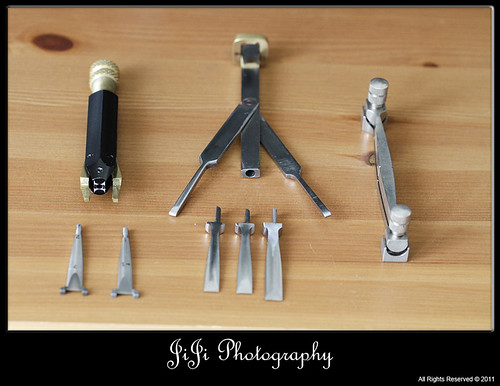
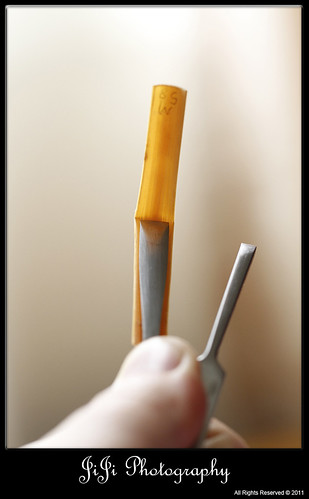
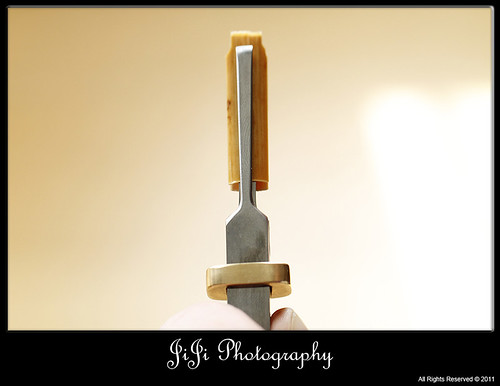
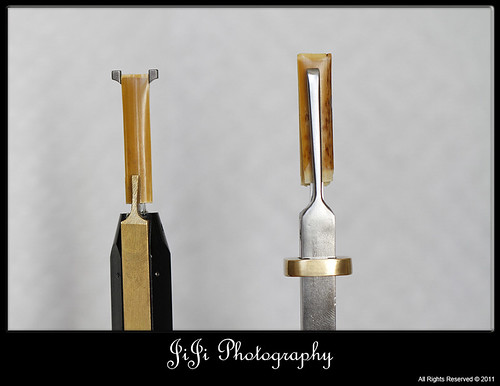
In terms of the sound quality and performance factors like stability, the shape and the binding are everything! The scraping has only one purpose: to let the cane do what it wants to do naturally – vibrate in response to the blowing. I find the choice of shaper and its combination with the staple size have even more effect than cane diameter, gouge thickness and any specific measurement around scraping. Please note that my wife put many more excellent images of shapers and more on her Flickr site.

Which shaper to choose is really an individual preference because it is a matter of responding to body parameters like teeth structure, characteristics of the lips, how the air pressure is channelled from the lungs to the mouth and very importantly, their interplay with the brand of oboe and even the individual instrument. This is why advanced oboists spend considerable money on shaper tips and to find the perfect staple.

There is really no right or wrong in choosing shapers, it’s all about what works for you: start with what your teacher recommends, then experiment and decide for yourself. For my part, and Europeans I know (French and German) who have tried the same, Kunibert Michel shapers (Germany) on Chiarugi staples (Italy) are a winning combination, vastly superior to all others. Comparisons will be left for another time.

_MG_1078 _MG_1080 _MG_0645

Finally, there are different types of shapers, which mean different ways to use them. The most common are interchangeable shaper tips that fit on a reusable handle: these require you to fold the cane over the tip. There are also “straight” shapers in which you insert non-folded cane: by completely covering the cane, there is no chance of nicking it or messing the shape. Finally, there is a new (expensive) machine that works on the principle of the straight shaper and is designed to roll-out hundreds of pieces of cane in very little time.

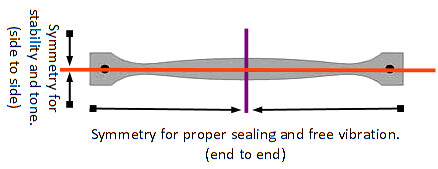
straightShaperSymmDespite the attractive idea of simplicity and safety with straight shapers, there is good reason why the fold-over interchangeable tips remain most popular: folding the can flattens it near the fold which resembles the real silhouette of the final reed whereas the straight kinds leave the cane curved; which means the reed will be much wider than the shaper leads to believe. The difficulty with manufacturing straight shapers (almost nil with fold-over tips) is that the important symmetry is from end-to-end: this ensures that when the cane is folded exactly the same curves meet, which is necessary for proper sealing and support for vibration.

With a little care, the fold-over tips will always yield excellent results, the only important consideration is a sharp cutting tool with no nicks in the blade: the tip really wrecks a blade! Many oboists use disposable razor blades, I use a retractable blade knife and break off pieces after every cane shaped.

_MG_0722 _MG_0710 _MG_0711

With shaper tips, there are again 2 types, and this makes really no difference at all in the quality of the final shaped cane: it’s just that they are used slightly differently. New-school shapers (have been around for generations!) have “ears” that introduce the blade to the sides of the cane. They leave “ears” on the cane that are easily removed after the cane is tied on the staple. Old-school shapers have no such ears and the shaped cane (ready for binding) is fully shaped. With ears, the cane must be sized to fit before closing the handle-clamps whereas no ears allows free positioning of the cane. In both cases, its just a matter of getting used to the moves.

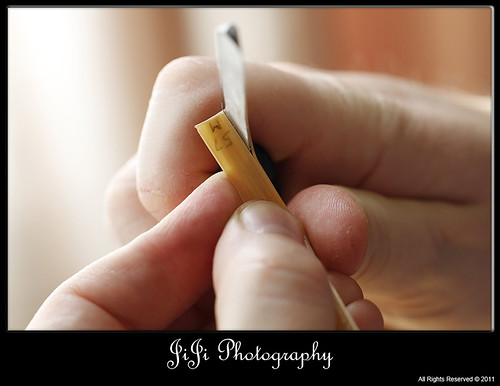
These videos (made from still images) show how I cut the cane after folding to fit the ears. I cut the cane to ensure the thick center (dark line in the middle) remains centered. The last video shows a typical technique: the shaping is done with the knife perpendicular to the shaper, but to ensure a “clean cut” a few extra strokes are made with a slight (very) angle: this makes a smooth side of the cane.

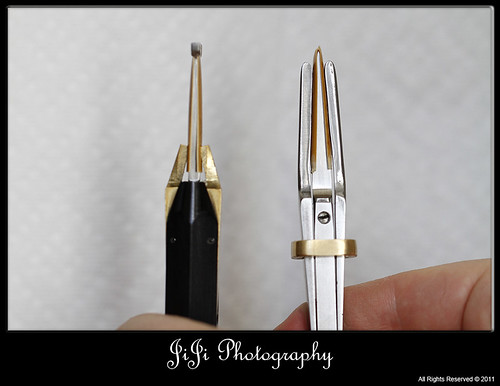
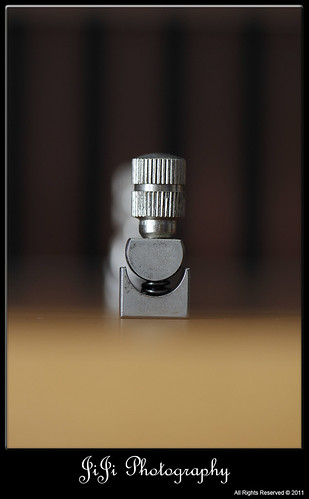
With heads that have no ears, I just center the line on the shaper itself. The two handles I use illustrate another consideration: the handle clamps. The shorter clamps are mounted on a tightening screw which makes it easy to reposition the cane; however, dents are left on it. With the German type handle, the clamps cover the entire cane are secured with a ring. This allows exactly enough pressure to secure the cane without denting it; I also like to use the ring as a leverage thumb-rest to more easily control the knife. With ears on the shaper tip, many people rest the ears on a table for better stability.

Conclusion:

Shaping is really not complicated, but the choice makes a HUGE difference. The choice of handle and tip description is entirely a matter of personal preference.

Friday, April 22

Engineering and Artistic Integrity

Whether you are Christian or Jewish or Zoroastrian

or Hindu or Muslim or Shinto or Neo-Pagan or what:

Arc-en-cielRire HAPPY EASTER! C'est la fêteCoeur rouge

For just this weekend, let’s all never mind the specific differences and look at the common grounds:

For Jews, the Passover is a celebration of the liberation from murderous bondage, liberated by God’s intervention through His Prophet Moses. For Christians, Easter is about the triumph of humanity’s bond with God through the Redeemer over the evil that seeks to enslave and destroy us (recall that it is not all Jews that condemned Christ, but the political coup of the Sanhedrin of that time and a band of revolutionary bandits). Muslims also proclaim that Jesus died on the Cross and that he resurrected and ascended into Heaven – Jesus never once spoke against the Jewish faith (which was His) and never allowed any one social group to disdain any other. Paganism celebrates Eostre as the revival of life after the dead seasons. Sheez, even hard-core atheists celebrate the return of comfortable weather… in the northern hemisphere anyway… those of the southern can still use another reason to have a party!

In my engineer’s point of view, do you see a pattern emerging here?
=> VICTORY OF OF LIGHT OVER DARKENESS!
Triumph of Freedom over oppression; Life over death;
Happiness over depression; Truth over lies; Love over hate.

So I beseech everyone to be happy, celebrate Easter together and enjoy the weekend!

Integrity: true strength is in the soul

I firmly believe that bullying is proof positive of weakness, stealing is proof of inability and lying is proof of desperation. Any idiot can insult or hurt someone. It takes much more power to earn trust and keep friendship. Striking fear invites retribution while fostering love invites cooperation. The person who steals proves that s/he is incapable of obtaining through her/his own merit. The person who shows contentment is victorious over peer-pressure and thus rises above the crowds; people who patiently make their way and build a different livelihood and surroundings show their ability to navigate the currents of society and contribute rather than siphon. Those who help others show a self-evident strength where pirates and mockers only show themselves as parasites. People with positive attitudes find solutions or at least inspire others to do so; those who complain their problems are someone else’s fault and rely on condemning others only bring more hostility onto themselves.

As a graduate student in Computer Engineering, I did a lot of Teaching Assistance (average 115% work load). I was amazed at how students cheated because, when I was in their shoes, my thought was always: “At the exam, there will be only me… in the real world, I will have to do the job… so I’d better do the work and develop the skills now”. In fact, I did have the opportunity to submit a senior classmate’s assignments: he gave me all his solutions from the year before knowing that I would only use them to learn or as a last result. In fact, I sometimes handed-in very flawed work instead of copying, because I preferred an honourable failure: how else could I learn and improve? Obviously, not everyone agrees.

How can you cheat in music?

My background is music performance. On stage, there is no cheating: it’s me, my instrument and the audience. There’s no way to use someone else’s performance and pass it as my own in an audition…. I can’t get someone else to audition in my place: they want the job too! If I put some great soloist’s recording on this blog, passing it off as mine… well, someone will hear me eventually and blow my cover: I will be left to face my deceptions alone, impressing only the weak and idle.

Showing my playing faults now will highlight my evolution, my improvement over the months and years will demonstrate the strength of my commitment, the worth of my efforts. If I do not improve, if I make a fool of myself over and over again, then it will be done with honour and prove my confidence in letting people know the truth rather than giving an impression that will just come crashing down on me should ever I wish to meet someone in person. Rather than closing doors by presenting a false image of my performance, I prefer to open doors to people of all levels and of all descriptions. Even if I never improve, or get worse, my enjoyment of the process should inspire other hobbyists and beginners and might impress upon professionals to remember the passion that lead to their “daily grind” as performers!

My best and most sincere wishes of
true strength and honest power to you all!

Friday, April 15

Engineering Oboe Players

Well over 5000 visits, now, from 58 countries! StarPouce levé 

I wish I had something to present in order to toot my own horn, but these past few weeks have been rather busy and I've only begun to practice again last Saturday. 3 weeks absence is rooouuugh on the endurance!

Here are a few pictures of how I practice at lunch time in the truck. Last summer, before buying our vehicle, I did the same thing in a Nissan Versa: so it's not the size, but how you use it!

So instead of showing off something of my own, I'd like to pay a little tribute to you, my readers. That is, I don't know what characterizes my readership (you), but the blog is geared towards:

  1. Oboe players (other instruments too, why not?)
  2. who are probably doing something else in life and/or still in school
  3. who must overcome hurdles to enjoy the wonderful thing which is practicing the oboe!

There are many oboists in situations like mine. Some play much more actively, some play even less than me. Some have no real trouble in life, some have much worse physical impediments than mine. Mostly, everyone contributes to society through their "day jobs" in a way that is made richer for being oboists. On the good ol' BBoard, I was surprised to see a good number of engineers and other non-musical professionals posting with lots of oboistic expertise. Some of their stories are on the BBoard. Some actually gained their engineering penchant by attacking oboe mechanical problems and improving reed making equipment.

... another odd thing is that it seems a whole lot of us are composers too! Yes, I compose, or used to: but that something for another time. For the purposes of this post, it seems that there is something inherently creative about the engineering personality which expresses itself as composition, when we don our composer's hat.

Which difficulty do you choose?

Whether you become an engineer or a nurse or or a teacher of English Literature or a financial consultant and so on, you have to devote years of harsh university training and certification. If you become an auto mechanic or a home contractor/renovator or a photographer, there is still training and certification involved (often ongoing) and to a great extent the safety of your clientele, their reputation and their comfort rests in your hands. Even garbage collectors and park cleaners have a huge impact on everyone’s enjoyment of life every day. To me, people who take their profession to heart are worthy people indeed.

Professional musicians must also devote years of their life training. The training is an enjoyable journey (I should hope so) but then they face an uphill battle for their livelihood: I know, I started up the path and quit! Although engineering was very hard for me because I didn’t have the talent for math and that kind of mental processes, finding a job was much easier once I got my degrees – so essentially, I traded one difficulty for another, but with an easier payoff in the end. What is really striking are the stories of people who have continued to play all through their alternate careers (e.g. engineering, nursing, government) and have been able, this way, to become as active as some professionals in their pre/retirement days. Many were fully trained at university (or equivalent) and almost none seem to regret the path they took.

Examples of how ordinary people use all the creative resources at their disposal to do some really amazing musical things. I can also mention a Registered Nurse who also suffers chronic pain and is, nonetheless, actually returning to music as means to earn her living. Same thing for a former government employee (now music teacher) who used to be sent to many countries in sometimes hostile situations as part of the job. I don't know if the oboe contributes or benefits from it, but these people (maybe you, now or later) are actually providing benefit to the world around whether they realize it or not. Hey, maybe there's hope for me yet!

In the meantime, thank you: Argentina, Australia, Austria, Belarus, Belgium, Brazil, Bulgaria, Canada, Chile, China, Columbia, Cyprus, Ecuador, Egypt, Finland, France, Germany, Guam, Hong-Kong, Hungary, Italy, India, Ireland, Israel, Japan, Jordan, Latvia, Lithuania, Malaysia, Mexico, Moldova, Morocco, Netherlands, New Zealand, Nicaragua, Nigeria, Norway, Philippines, Poland, Portugal, Romania, Russia, Serbia, Singapore, Slovakia, Slovenia, South Korea, Spain, Sri Lanka, Sweden, Switzerland, Taiwan, Turkey, Ukraine, United Arab Emirates, United Kingdom, United States of America, Venezuela